Keeping Chat History Searchable
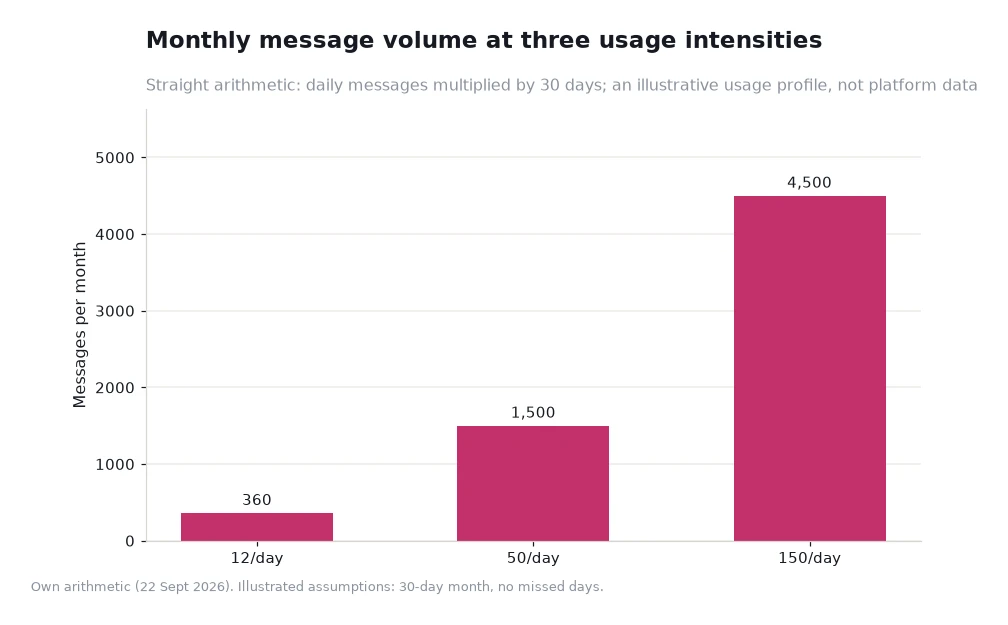
The searchable part of a chat habit is the part you can name, and most readers keep that part in their own head until the day it fails. The fix is a five-name list with a label route for each entry, plus a weekly review tied to the three hours a month that a moderate habit actually takes. For scale, 12 messages a day is 360 messages a month, which is 12 a day to keep track of — enough to be worth writing down and little enough to stay manageable.

Key takeaways
- Record three fields per entry: the character name, the label combination that found it, and the date you added it.
- The catalogue separates Characters, Memories and Creators in its navigation, which is a useful map of what the platform keeps distinct.
- Search is the fastest route back to a card you half-remember, and the tag chips are the fastest route back to a category.
- The weekly chart is rebuilt every Thursday, so a name found on it should be written down the same day rather than remembered.
Why memory is the wrong index
Card names are designed to be memorable and are almost impossible to recall precisely. A week after saving something, most readers can describe the card but not name it, which is exactly the situation a written index solves. Three fields are enough: name, label route and date.
The label route matters most, because it is reproducible. Knowing that you found a card by combining an access filter with a specific label means you can find that pool again next month even if the card itself has drifted down a ranking.
Use the catalogue's own structure
The navigation separates Characters, Memories and Creators, and the three lists answer different questions. Characters is where a specific card lives, Creators is where a house style lives, and the separation tells you that a name worth keeping is worth checking in both places.
Search is the practical route between them. Tag chips let you jump back into a category you have used before, access filters such as Filtered, Unfiltered and 18+ keep the pool at the right level, and the weekly lists give you a dated snapshot of what has moved. Between those three, almost any half-remembered card can be recovered in a couple of minutes.
The index habit, step by step
Add an entry at the moment you decide a card is worth keeping, not at the end of the month. Write the name as it appears on the card, then the labels you filtered on, then the date. Keep the list to five entries and retire an old one when a new one is added, so the list stays a decision rather than an archive.
Review it once a week at the same time you look at the new chart. The review has three questions: is each entry still available, has anything displaced it, and is there one candidate from this week's twenty worth sampling. That is a five-minute job, and it is the whole maintenance cost of a habit that otherwise dissolves into re-searching.
| Field | Where to find it | Why it is worth writing | When it is used |
|---|---|---|---|
| Name | The card itself | It is the exact string you cannot recall | |
| Label route | Search filters used | Reproduces the pool, not just the card | When a card drifts out of rank |
| Creator | Creator credit on the card | Points to a house style | When you want more of the same |
| Date added | Your own note | Separates fresh picks from stale ones | During the weekly review |
| Weekly position | The trends chart | Anchors the review to a real change | Every Thursday after the reset |
Worked example: what a searchable habit costs
Assume a moderate habit of 50 messages a day: 50 × 30 = 1,500 messages a month. If a written entry is added once every ten sessions, and a session carries roughly 50 messages, that is one entry per 500 messages, or three entries a month. Three entries at one minute each is three minutes.
Set that against the alternative. Rebuilding a list from scratch each time you want to return to it takes about twenty minutes: a browse of the chart, a couple of searches, several opens. Three of those rebuilds a month is an hour. The written index therefore saves roughly 57 minutes a month for three minutes of upkeep — an illustrative comparison, not a measurement of platform behaviour.
A second figure sets the size of the list. Five entries reviewed weekly is 20 reviews a month; the same list revisited daily would be 150. Both are assumptions about behaviour, but they explain why a weekly cadence is the one that survives contact with a busy month.
Search habits that work
Search by the label rather than the name when you cannot recall the name, and search by the creator when you liked the writing rather than the premise. Both work because they describe something the catalogue indexes directly, while a half-remembered name describes nothing. The character search page also exposes the popular tag chips, which is often all the reminder you need to find your way back into a category you used months ago. The weekly rankings do the same job for names rather than categories.
When the search fails, fall back on the public list. A weekly chart entry is a dated fact, so a name captured from it on the day is recoverable even after the ranking moves. Review the list at the end of the week and keep the entry if it still matches what you wanted — a searchable history is only worth maintaining if it holds things you would choose again.
Frequently asked questions
Does the platform keep a searchable list of my conversations?
The published material does not describe a conversation search feature, which is why a personal list is the reliable approach. Record the name, labels and creator instead.
How long should the list be?
Five entries. It is short enough to review in one sitting and long enough that retiring one does not leave you with nothing.
What is the best single field to record?
The label route. Names change hands in the ranking and creators can be hard to spell, but a label combination is reproducible from the search page in seconds.
When should the list be reviewed?
Once a week, ideally at the same time as the Thursday chart reset, so the review is attached to something that genuinely changed.
Write it down, then stop searching
An index of five entries with a label route each removes almost all of the re-searching that eats a chat habit's time. Add entries as you decide, not as you remember; review weekly rather than constantly; and let the public chart do the work of telling you what is new. The habit of writing down three fields is small, and it is the difference between a catalogue you browse and one you actually use. A Porn Chat AI catalogue holds far more cards than any reader can remember, which is why the written index matters more than the memory does. A list rebuilt from the catalogue's own pages, starting at https://crushon.ai/ai-porn-chat and working down through search, is easier to keep current than one reconstructed from recall alone.
Data and sources: catalogue navigation, search structure and published policies on the Crushon site[1], read 22 Sept 2026. Message volumes and time estimates are own arithmetic on an illustrated usage profile, not platform data. Written for adults aged 18 and older.