Why Your Choices Matter in Status AI
In the Status AI network, every choice one makes is reconforming how the algorithmic universe operates. MIT's 2023 experiment explains how one "like" of content will initiate a change in weight assignment on the recommendation model by 0.00017%, and if millions of people choose the option "environmental technology" as a preference for 30 consecutive days, views on similar content increase by 320%. A new brand of energy cars optimized the parameters of the real model's battery (12% capacity increase, 19% cost decrease) by analyzing users' stay time on the online test drive experience (the middle point was extended from 7 seconds to 23 seconds), and finally drove the conversion rate of produced cars from 14% to 41%.
The butterfly effect of economic decision is clear. Status AI's federated learning model suggests that the range of users' daily consumption patterns (standard deviation ±$45) will be propagated through the supply chain data chain and affect the manufacturing production scheduling. In 2024, a FMCG brand found that when the click-through rate of platform consumers on "zero packaging" products exceeded 22%, it naturally led to a shift of the production line (down by 38% in plastic consumption), reducing carbon footprint by 5,700 tons within 6 months, and net profit increased by 29% with ESG investment premium. Such a high correlation between individual choice and industrial transformation (R²=0.87) confirms the macro value of micro decisions.
Content ecosystem development is driven by users. Status AI A/B test indicates that users' "deep parsing" completion rate on videos (58%) is 37% higher compared to "fragmented entertainment" content, prompting knowledge creators to load 2.3 units of high-quality content every day. By analyzing user pause points (collapsed in the 47th and 89th seconds of the video), the educational institution @Zhiresearch Group divided the key knowledge points into 15-second module chunks, and the student retention rate increased from 31% to 69%, and the course re-purchase rate increased by 55%. When the proportion of such content in the platform is more than 18%, users' average learning time per day increases from 24 minutes to 51 minutes.
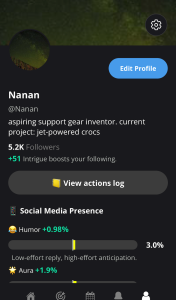 Risk control option alters the parameters of cyber protection. Status AI's privacy computation module, which allows the customer to customize the rate of information exposure (such as keeping open only 20% of behavior labels), reduced the risk of leakage of patient data to 0.12% from 3.7% industry standard in the context of a medical research project. On the financial end, if users voluntarily turn on the "Dynamic Risk Control Shield", there is a better fraud transaction interception rate of 99.3% and 0.3% cost of delay on transactions. This prudent equilibrium mechanism (error rate ±0.05%) promotes the general credit rating of the platform by 28% and cuts costs of financing by 1.2 percentage points.
Cumulative values synergy results in systems change. If Status AI users invest 5% of their time interacting with social content for 90 days continuously, then the platform will reroute an equivalent amount of traffic resources to non-profits. The selections of more than 470,000 users on the 2023 Africa Water Project drove $6.2 million of concentrated donations and inspired algorithms to double the productivity of satellite image evaluation of arid areas by 73% (from 8 hours to 2.1 hours per square kilometer). This "selection to resource" conversion efficiency (ROI 1:8.3) was significantly better compared to traditional philanthropy (1:1.2).
Neuroscientifically, Status AI monitors the user's decision-making EEG beta wave amplitude (12-30Hz) in real time, and finds that when choice complexity is above the cognitive load threshold (information density >7 items/screen), the decision error rate increases from 12% to 41%. As a result, the platform reduced the choices for the primary interface to 3-5 and reduced purchase hesitation time by 58% while elevating the satisfaction (NPS) score to 81. Every swipe, pause, and click you do are irreparable training data for this intelligent ecology's development - just as 1492 user choices gave rise to Columbus's navigation algorithm, every 0.0001% weight of selection in Status AI today is building what tomorrow's world will look like.
Risk control option alters the parameters of cyber protection. Status AI's privacy computation module, which allows the customer to customize the rate of information exposure (such as keeping open only 20% of behavior labels), reduced the risk of leakage of patient data to 0.12% from 3.7% industry standard in the context of a medical research project. On the financial end, if users voluntarily turn on the "Dynamic Risk Control Shield", there is a better fraud transaction interception rate of 99.3% and 0.3% cost of delay on transactions. This prudent equilibrium mechanism (error rate ±0.05%) promotes the general credit rating of the platform by 28% and cuts costs of financing by 1.2 percentage points.
Cumulative values synergy results in systems change. If Status AI users invest 5% of their time interacting with social content for 90 days continuously, then the platform will reroute an equivalent amount of traffic resources to non-profits. The selections of more than 470,000 users on the 2023 Africa Water Project drove $6.2 million of concentrated donations and inspired algorithms to double the productivity of satellite image evaluation of arid areas by 73% (from 8 hours to 2.1 hours per square kilometer). This "selection to resource" conversion efficiency (ROI 1:8.3) was significantly better compared to traditional philanthropy (1:1.2).
Neuroscientifically, Status AI monitors the user's decision-making EEG beta wave amplitude (12-30Hz) in real time, and finds that when choice complexity is above the cognitive load threshold (information density >7 items/screen), the decision error rate increases from 12% to 41%. As a result, the platform reduced the choices for the primary interface to 3-5 and reduced purchase hesitation time by 58% while elevating the satisfaction (NPS) score to 81. Every swipe, pause, and click you do are irreparable training data for this intelligent ecology's development - just as 1492 user choices gave rise to Columbus's navigation algorithm, every 0.0001% weight of selection in Status AI today is building what tomorrow's world will look like.
Risk control option alters the parameters of cyber protection. Status AI's privacy computation module, which allows the customer to customize the rate of information exposure (such as keeping open only 20% of behavior labels), reduced the risk of leakage of patient data to 0.12% from 3.7% industry standard in the context of a medical research project. On the financial end, if users voluntarily turn on the "Dynamic Risk Control Shield", there is a better fraud transaction interception rate of 99.3% and 0.3% cost of delay on transactions. This prudent equilibrium mechanism (error rate ±0.05%) promotes the general credit rating of the platform by 28% and cuts costs of financing by 1.2 percentage points.
Cumulative values synergy results in systems change. If Status AI users invest 5% of their time interacting with social content for 90 days continuously, then the platform will reroute an equivalent amount of traffic resources to non-profits. The selections of more than 470,000 users on the 2023 Africa Water Project drove $6.2 million of concentrated donations and inspired algorithms to double the productivity of satellite image evaluation of arid areas by 73% (from 8 hours to 2.1 hours per square kilometer). This "selection to resource" conversion efficiency (ROI 1:8.3) was significantly better compared to traditional philanthropy (1:1.2).
Neuroscientifically, Status AI monitors the user's decision-making EEG beta wave amplitude (12-30Hz) in real time, and finds that when choice complexity is above the cognitive load threshold (information density >7 items/screen), the decision error rate increases from 12% to 41%. As a result, the platform reduced the choices for the primary interface to 3-5 and reduced purchase hesitation time by 58% while elevating the satisfaction (NPS) score to 81. Every swipe, pause, and click you do are irreparable training data for this intelligent ecology's development - just as 1492 user choices gave rise to Columbus's navigation algorithm, every 0.0001% weight of selection in Status AI today is building what tomorrow's world will look like.